

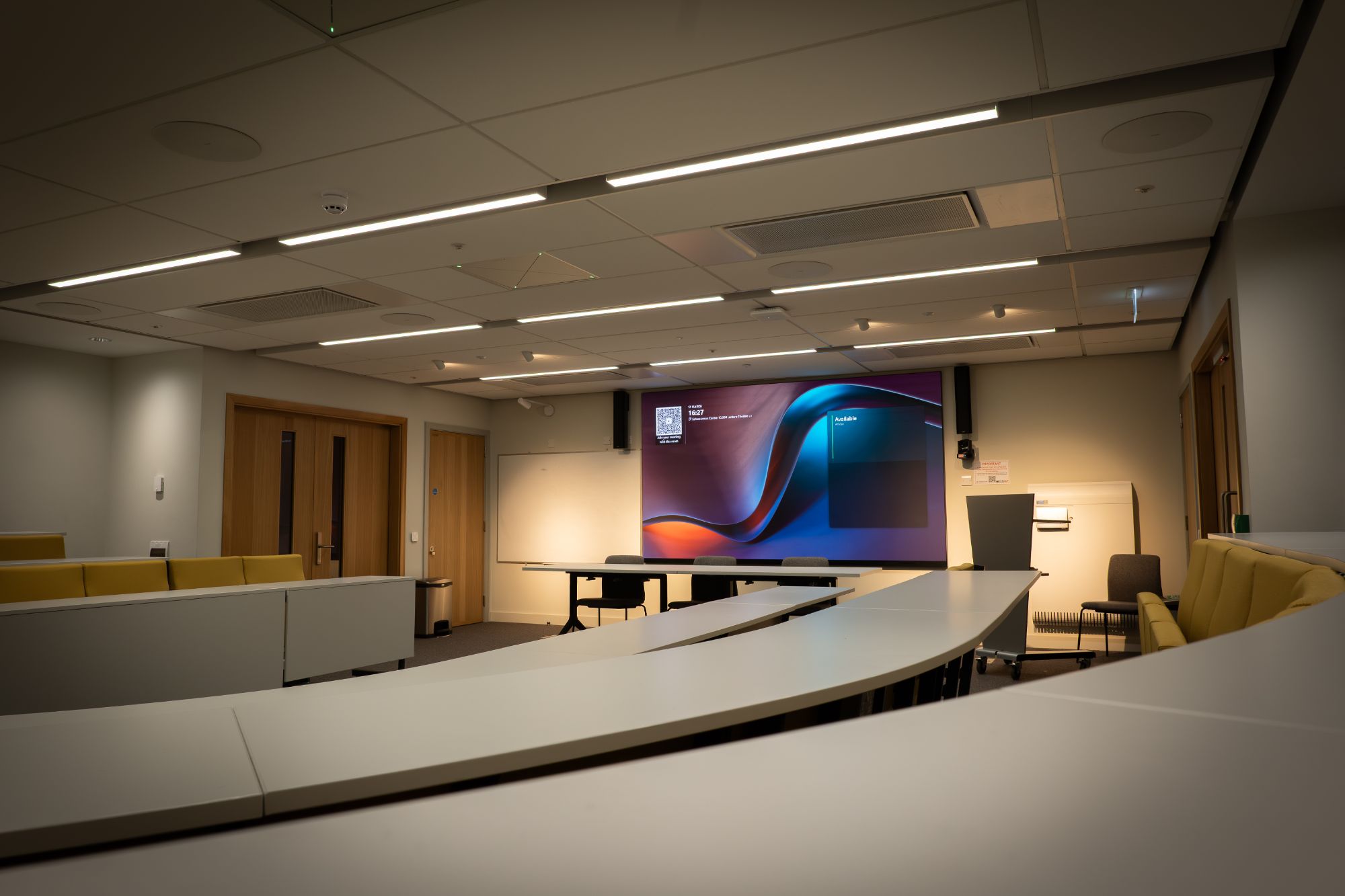
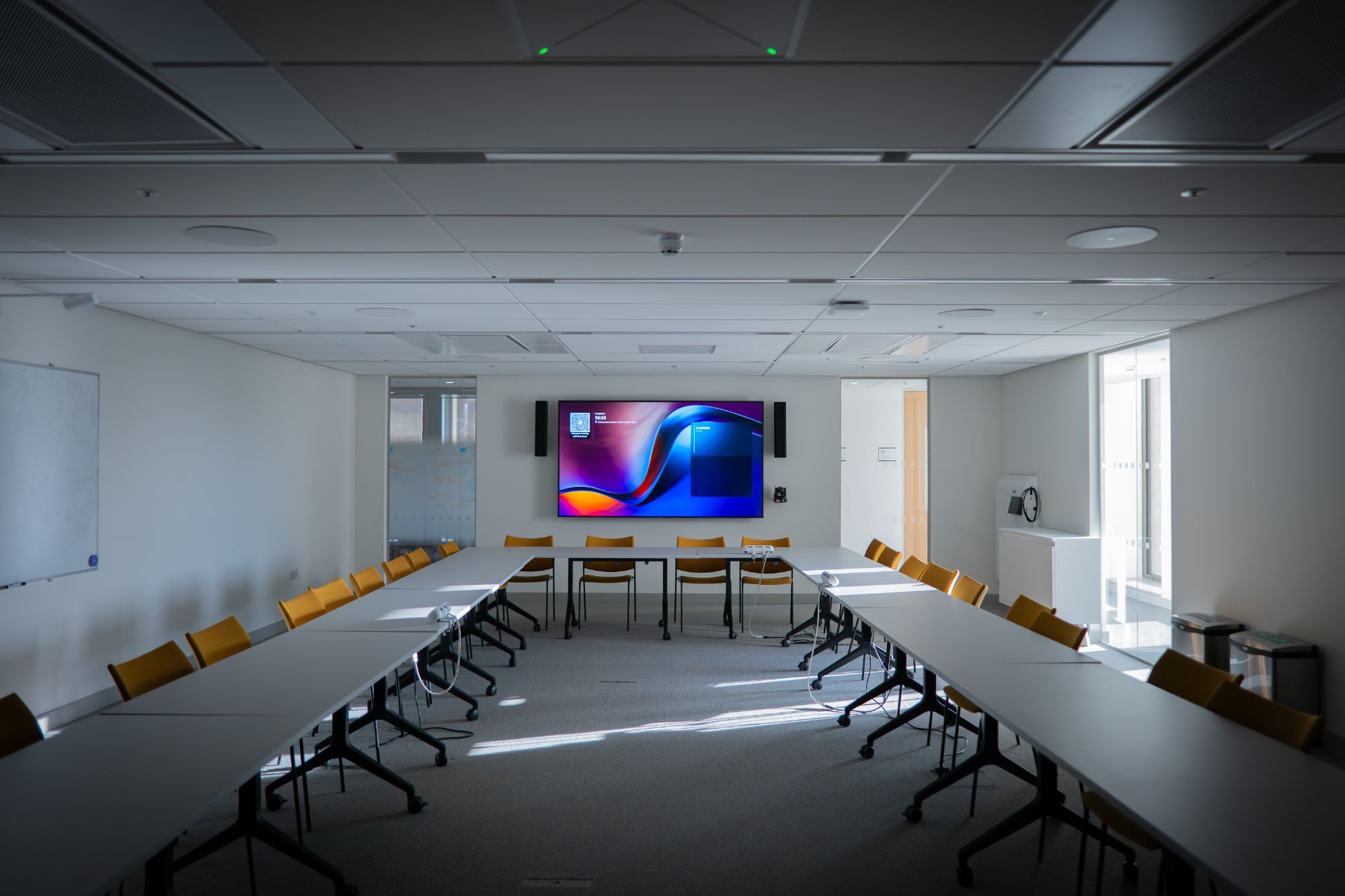
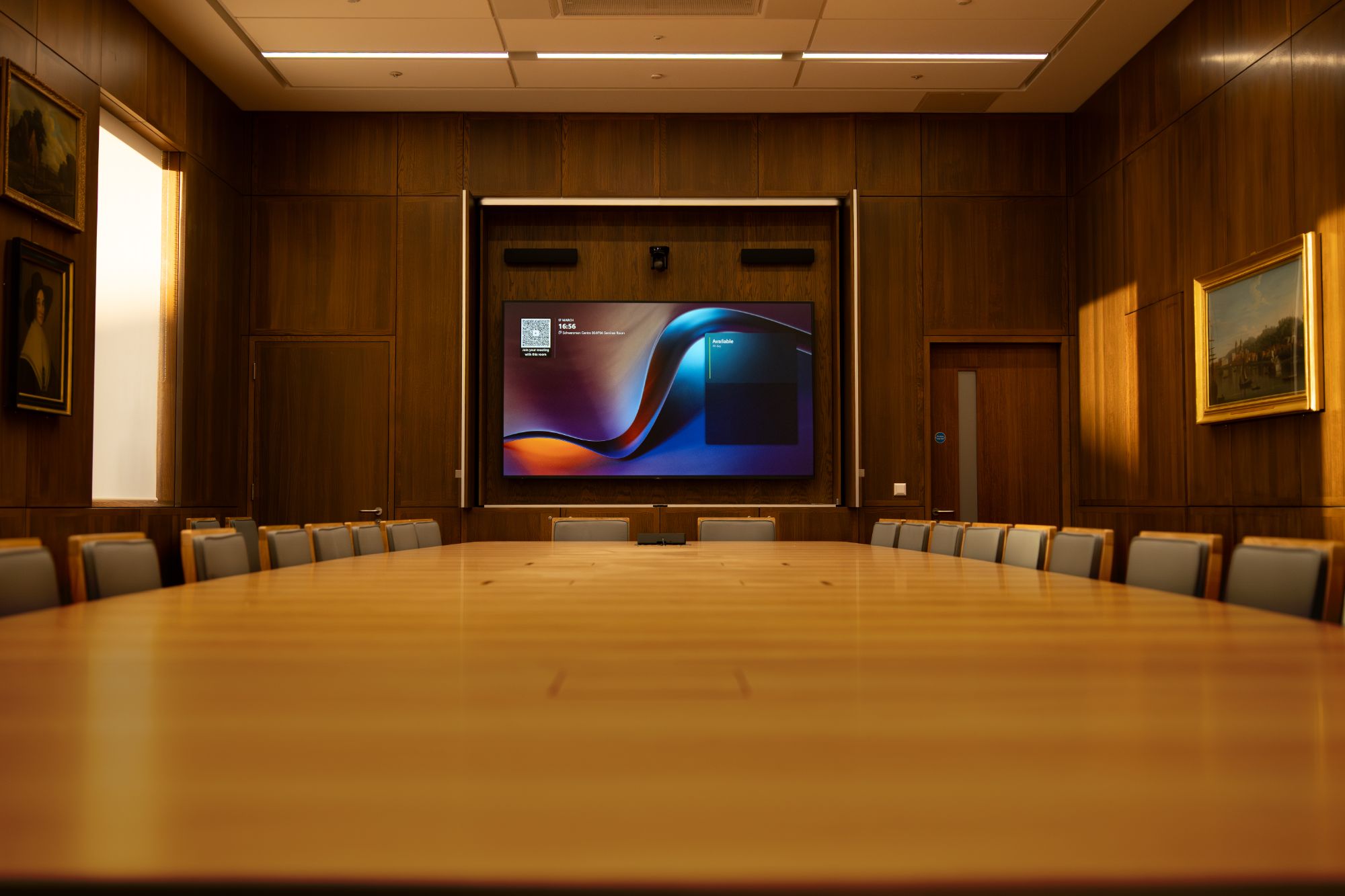
Each space was designed by Hewshott from the outset as a hybrid environment, capable of supporting in-person teaching, remote collaboration and events without reconfiguration. Hybrid capability was an important requirement from day one, shaped in the design phase by Hewshott and built into the AV architecture at every level.
Matt Hall, Principal Consultant at Hewshott notes "The design vision for the building was to develop a system where every single one of the hundred or so AV-enabled spaces could be used flexibly, no matter what the requirements of the users at that time."
The entire AV infrastructure at the Schwarzman Centre is built on a fully converged AV-over-IP architecture. Rather than traditional point-to-point cabling, audio, video and control signals travel across the University's IP network, managed and distributed by a centralised platform.
At the heart of the system are eight Q-SYS Core 610 processors, each licensed with Capacity Scaling, Scripting Engine and UCI Deployment software, forming a resilient, building-wide backbone to handle all audio processing, video routing and room control.
Video is distributed via Q-SYS NV-21-HU AVoIP endpoints throughout the building, eliminating the need for traditional matrix switching infrastructure. Audio travels across a full Dante network, delivering high-channel-count, low-latency audio distribution to every space.
Every device on the network can be monitored and managed remotely. The network-first approach also future-proofs the building, meaning that adding capacity or integrating new technologies can be done without the physical constraints of a fixed cabling plant.
Stuart Harris, GVAV's Technical Sales Manager, describes the approach: "From a very early stage it was decided to go down an IP-first route. From that point onwards, Q-SYS was selected as the platform best suited to move all of the video and audio across the building."





_main_lg_col4_hpad0_x4.png)
